
Story
The story, told straight
2020. Fifty-four.
My back gave out during covid. Eight weeks bed-ridden, and no one could tell me why. When I got up, I could walk, with pain. It took about a year to get back to walking that did not hurt.
2020 to 2022. The two years without a name.
The pain came and went. One specialist, then another. The imaging did not show it yet. What I had instead of a diagnosis was attention: which positions I could hold, what lit the pain up, what made the next morning worse. I could even run in those years. I just paid for every run afterward.
If you are in an undiagnosed stretch right now, that middle part is for you. The not-yet-knowing does not mean nothing is happening. I was learning my own case the whole time, and it mattered later.
2022. Fifty-six. The name.
Two-level spondylolisthesis. Two orthopedic surgeons, both recommending fusion. The diagnosis was real and the recommendation was sound. I took it seriously, talked it through with my doctors, and chose to exhaust every non-surgical path first. Fusion stays on the table today if I ever need it. How I thought about that decision has its own page.
2022 to 2026. The rebuild.
Four pillars. Physical therapy as a teacher, not a prescription. My own study of the physiology, so I understood the why behind every movement. Diet. A small set of supplements.
It started with a deadbug, and I could not do one. From there it was one exercise at a time, one rep at a time, over years, not months. About a year in, running stopped hurting afterward. The pain milestones were the real ones. Not what I could do, but what stopped hurting after I did it. The training page has the routine as it exists today.
Most of those four years look boring from the outside. That is the honest shape of it. There was no montage. There were Tuesdays.
2026. Sixty.
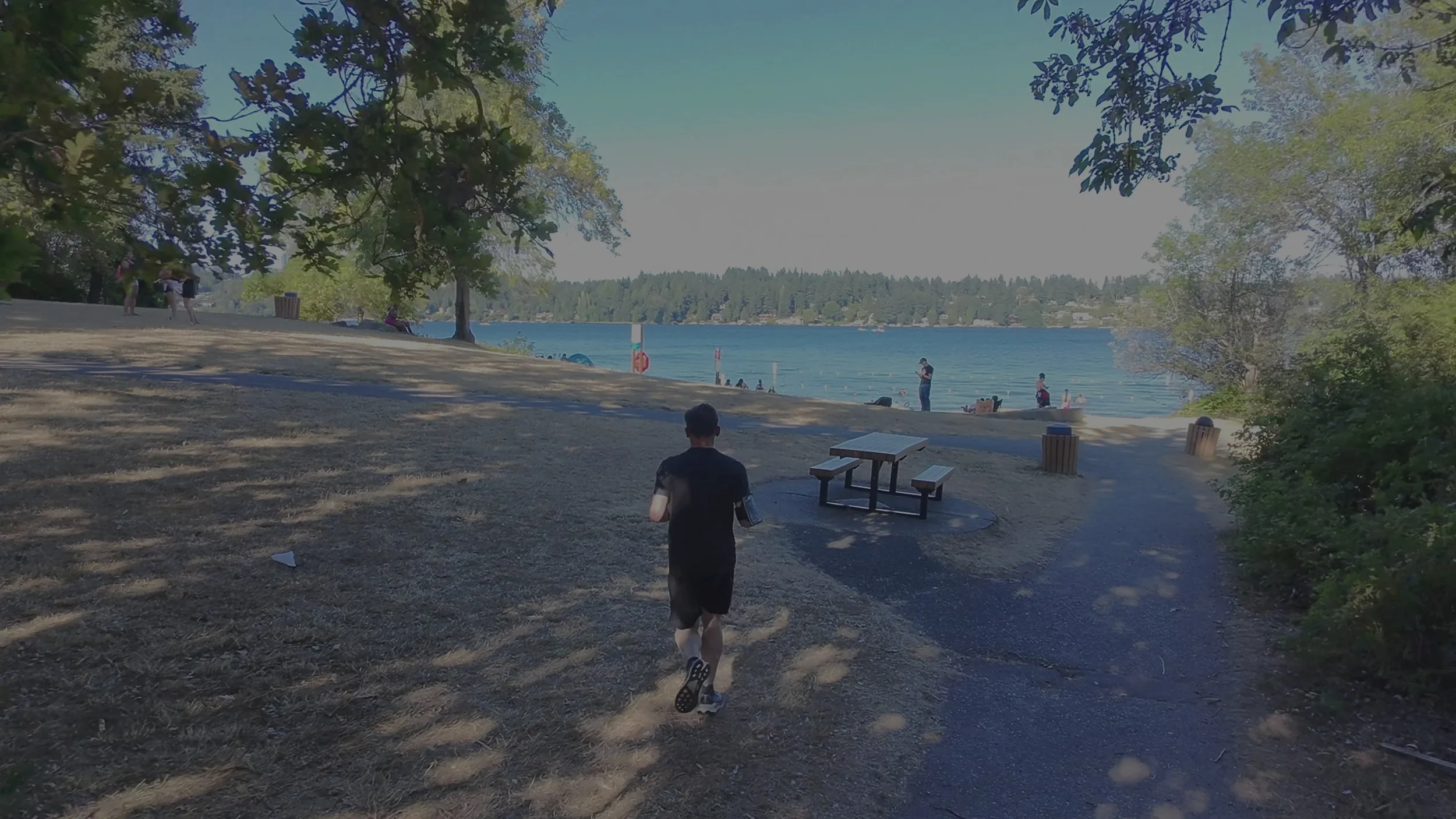
I turned 60 on June 28, in the middle of the Cougar Mountain Trail Series, trail 5Ks through the summer at the park where I train.
June: 29:17, first in my age group, at 59. July: 31:05, ten days into a cold, third in my age group, my first race at 60. August: 28:53, first in my age group, my fastest of the three. That August time was the fastest 5K by anyone 50 or over across the whole summer series.
I say the times because they are facts, and facts are what I have to offer. Six years ago I was in bed for eight weeks. This summer I raced, at 60, on the trails I rebuilt for.
Why I tell it
Because in 2022, at 2am, I could not find one person who had been where I was. Clinics, yes. Journals, yes. A man my age with my diagnosis, telling it straight, including the parts that did not work. No.
So this site, and the YouTube channel, are that. Not advice. Not a program. Just the whole thing, told straight, by someone still in it. If any of it lands where you are, the engage page has my email. I answer.
Not medical advice. One case, told honestly. Talk to your own doctors.

Sed ut perspiciatis unde omnis iste natus error sit voluptatem accusantium doloremque laudantium, totam rem aperiam,
The following text is placeholder known as “lorem ipsum,” which is scrambled Latin used by designers to mimic real copy. Lorem ipsum dolor sit amet Nullam vel ultricies metus, at tincidunt arcu. Morbi vestibulum, ligula ut efficitur mollis, mi massa accumsan justo, accumsan auctor orci lectus ac ipsum. Proin porta nisl sem, ac suscipit lorem dignissim et. Curabitur euismod nec augue vitae dictum. Nam mattis, massa quis consequat molestie, erat justo vulputate tortor, a sollicitudin turpis felis eget risus. Aliquam viverra urna felis, eu ornare enim consectetur sed. Morbi vitae ultrices velit. Sed molestie consectetur metus. Proin neque eros, dapibus ac accumsansodales sit.
Sed ut perspiciatis unde omnis iste natus error sit voluptatem accusantium doloremque laudantium, totam rem aperiam, eaque ipsa quae ab illo inventore veritatis et quasi architecto beatae vitae dicta sunt explicabo. Nemo enim ipsam voluptatem quia voluptas sit aspernatur aut odit aut fugit, sed quia consequuntur magni dolores eos qui ratione voluptatem sequi nesciunt. Neque porro quisquam est, qui dolorem ipsum quia dolor sit amet, consectetur, adipisci velit, sed quia non numquam eius modi tempora incidunt ut labore et dolore magnam aliquam quaerat voluptatem. Ut enim ad minima veniam, quis nostrum exercitationem ullam corporis suscipit laboriosam.